
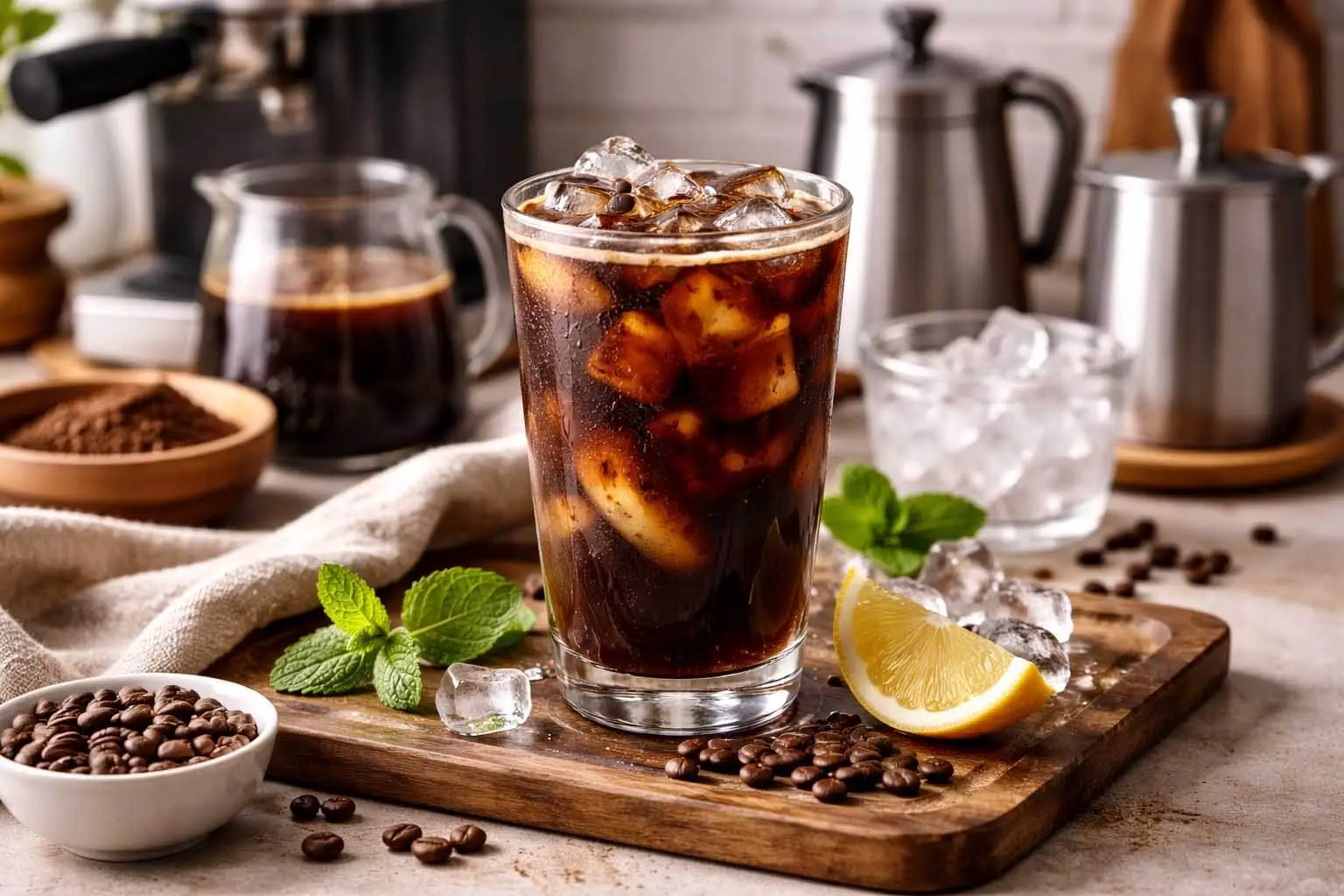
At first glance, an iced Americano looks almost too simple to matter.
No foam.
No syrups.
No whipped toppings.
Just espresso, water, and ice.
And yet, after years working behind café counters and observing daily coffee habits, I can confidently say this:
Iced Americano is one of the most misunderstood — and most reliable — drinks in modern coffee culture.
It became popular not because it’s flashy…
But because it’s repeatable.
How the Americano Started — and Why That Still Matters
The origin story connects to World War II. American soldiers in Italy found espresso too concentrated compared to the larger cups of brewed coffee they were used to. Diluting espresso with hot water created something closer to home.
That small adjustment created a bridge between espresso intensity and drinkability.
The iced version simply extended that logic into modern lifestyles.
The core principle remained the same:
Concentration → Controlled dilution → Balance.
Understanding this principle is what makes iced Americano successful — not just trendy.
Why Iced Americano Became a Daily Habit
1) It Feels Clean
Unlike milk-based iced drinks, iced Americano doesn’t coat the palate.
It refreshes instead of filling.
That’s why people choose it during:
- Long workdays
- Hot weather
- Low-sugar routines
It delivers caffeine without heaviness.
2) It Keeps Coffee Honest
Milk softens flavor. Syrups disguise bitterness.
Iced Americano exposes the espresso.
If your espresso is well extracted, the drink tastes smooth and extended.
If not — the flaws show immediately.
This honesty is exactly why many coffee drinkers prefer it.
The Real Difference: Iced Americano vs Iced Coffee vs Cold Brew
Understanding this makes your home results dramatically better.
Iced Americano
Espresso + water + ice
Crisp, sharp, immediate.
Iced Coffee
Brewed coffee poured over ice
Depends heavily on brewing strength.
Cold Brew
Long cold extraction (8–16 hours)
Smoother, lower perceived acidity.
If you want speed and control, Americano wins.
If you want smooth depth, cold brew wins.
Knowing which profile you want prevents disappointment.
The Science of Dilution (Where Most People Go Wrong)
Iced Americano lives or dies by dilution balance.
Common mistakes I’ve seen repeatedly in cafés:
- Pouring espresso directly onto too little ice
- Using room-temperature water
- Using tiny cubes that melt instantly
- Not adjusting water based on espresso roast
Why it matters
Hot espresso melts ice quickly.
That sudden melt changes the ratio instantly.
If you don’t account for this, your drink becomes:
Too watery
Too sharp
Too inconsistent
The Correct Base Ratio (Reliable Starting Point)
For a balanced iced Americano:
1 double shot espresso (approx. 18–20g dose)
90–120ml cold water
Large ice cubes filling the glass
Adjust water based on roast:
Light roast → slightly more water
Dark roast → slightly less
This small adjustment changes everything.
Three Practical Methods (Try This at Home)
Method 1: Water First (Most Balanced)
Ice → Cold Water → Espresso last
Pros:
- Smoother taste
- Slower dilution
- Better visual layering
Best for daily use.
Method 2: Espresso First (Stronger Hit)
Espresso → Ice → Water
Pros:
- More aroma upfront
- Slightly bolder first sip
But melts ice faster.
Method 3: Flash Chill Technique
Pull espresso directly onto a small amount of ice.
Then add more ice and cold water immediately.
This locks in aroma while controlling bitterness.
Try all three methods on different days.
You’ll taste the difference immediately.
Advanced Adjustments (For Better Results)
Use Larger Ice Cubes
Small cubes melt too fast.
Larger cubes stabilize dilution.
Chill the Glass
A cold glass reduces rapid melting by up to 20–30%.
Adjust Based on Roast Level
Light roast espresso can taste sharp when iced.
Increase water slightly or use a softer extraction.
Use Filtered Cold Water
Water quality affects clarity more in Americano than in milk drinks.
Popular Variations (Without Ruining the Core)
Sparkling Americano
Replace still water with sparkling water.
Result:
- Extra crispness
- Higher perceived acidity
- Extremely refreshing
Lemon Slice
Adds brightness without sweetness.
Best with medium roasts.
Soft Americano
Add 10–15ml milk only.
Reduces sharpness without turning into a latte.
Why Iced Americano Works So Well at Home
Unlike milk-based drinks, iced Americano doesn’t require:
- Milk texturing skills
- Syrups
- Foam control
It scales easily.
It costs less than $1 per serving.
And it adapts to your preference.
That makes it habit-friendly.
Where Precision Helps (Without Overcomplicating It)
Most home mistakes don’t ruin the drink — they just make it inconsistent.
One day it tastes great.
Next day it feels watery.
That’s usually a ratio issue.
When you can adjust espresso strength and water volume accurately, the drink becomes repeatable.
And repeatability is what makes a drink stay in your routine.
Where SpoonCalc Becomes Useful (Without Overcomplicating Things)
If you’ve ever made an iced Americano that tasted perfect one day and slightly off the next, you already know the issue:
It’s rarely the espresso.
It’s the ratio.
Small changes in:
- Water volume
- Ice amount
- Espresso strength
can shift the balance quickly — especially with lighter or darker roasts.
This is where using a simple ratio-based tool like SpoonCalc becomes practical.
Not to turn coffee into math.
But to make experimentation repeatable.
Instead of guessing how much water to adjust, you can scale proportions accurately — whether you’re making one glass or serving several guests.
Consistency doesn’t require complexity.
It requires clarity.
Final Thoughts
Iced Americano didn’t become popular because it’s dramatic.
It became popular because it respects balance.
It delivers caffeine cleanly.
It adapts easily.
It doesn’t rely on sugar or cream.
And when made correctly, it becomes one of the most reliable drinks in your rotation.
Simple doesn’t mean basic.
In coffee, simple often means precise.
FAQ (Optimized)
Why does my iced Americano taste watery?
Too much melting ice or too much water. Use larger cubes and colder water.
Is it stronger than iced coffee?
Usually yes, because it’s espresso-based.
Can I make it without an espresso machine?
Yes — use a moka pot or very strong brewed coffee.
How can I reduce bitterness?
Use slightly more water, a smoother roast, or chill your glass before brewing.