
Some drinks feel like trends.
Others feel like habits in the making.
Iced matcha belongs to the second group.
It doesn’t arrive loudly.
It doesn’t demand attention.
And yet, once it enters someone’s routine, it tends to stay.
What makes iced matcha special isn’t just its color, or its origin, or even its reputation. It’s the way it moves effortlessly between worlds — from tradition to modern life, from quiet rituals to everyday refreshment.
This is the story of iced matcha: how it appeared, how it spread, why people embraced it, and how it became one of the most adaptable cold drinks prepared today.
The Roots of Matcha Before It Was Iced
Matcha did not begin as a casual drink.
Its story starts centuries ago, when powdered tea made its way from China to Japan. Over time, Japanese tea culture refined matcha into something deeply intentional. It wasn’t just about drinking tea — it was about slowing down, focusing, and being present.
Traditionally, matcha was:
- Prepared hot
- Whisked carefully by hand
- Consumed in silence or conversation
- Associated with balance and awareness
There was no rush.
No customization.
No shortcuts.
Matcha was not flexible — and that was the point.
How Matcha Became a Cold Drink
Iced matcha didn’t emerge from tradition.
It emerged from lifestyle.
As matcha traveled beyond Japan, it entered cultures with different rhythms:
- Faster mornings
- Longer workdays
- Hotter climates
- Café-driven routines
People loved the idea of matcha, but they wanted it to fit their day.
So they adapted it.
They chilled it.
They poured it over ice.
They added milk.
They softened it with subtle sweetness.
Iced matcha was not a rejection of tradition — it was a translation of it.
Why Iced Matcha Became So Popular
Iced matcha offers something many people quietly search for:
energy without intensity.
Unlike aggressive coffee drinks, iced matcha feels steady. It doesn’t rush the moment. It supports it.
People are drawn to iced matcha because:
- It feels refreshing without being sharp
- It delivers focus without heaviness
- It adapts easily to personal taste
- It works in both calm and busy settings
Cold preparation also changes how matcha tastes. Bitterness softens. Creamy and grassy notes become more approachable. For many people, iced matcha is their first comfortable entry point into matcha itself.
Where Iced Matcha Is Most Loved
While matcha remains deeply rooted in Japan, iced matcha consumption has grown strongest outside traditional tea settings.
Regions where iced matcha has become common include:
- Japan (modern cafés and convenience stores)
- United States
- South Korea
- Australia
- United Kingdom
- Parts of Southeast Asia
In many of these places, iced matcha is no longer viewed as a novelty. It’s a regular menu option — something people order without thinking twice.
That’s when a drink stops being a trend.
Iced Matcha as a Lifestyle Drink
Iced matcha didn’t spread only because of taste.
It spread because it fit into daily life.
It became associated with:
- Morning routines
- Afternoon resets
- Home preparation
- Visual calm
Its bright green color made it recognizable.
Its simplicity made it repeatable.
People didn’t need instructions.
They needed permission to adjust.
The Main Types of Iced Matcha Drinks
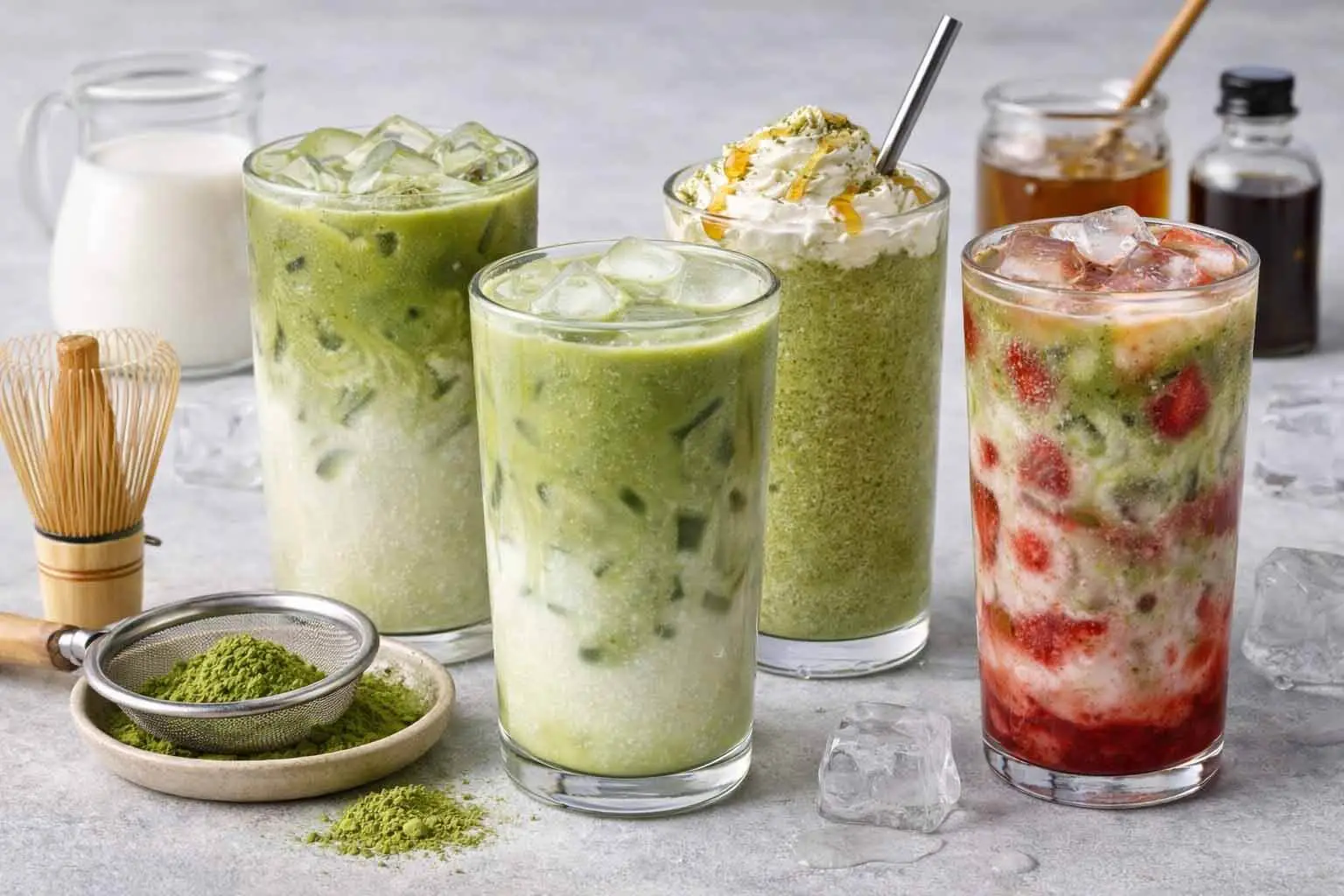
Matcha may be one ingredient, but the experience changes dramatically depending on how it’s prepared.
Classic Iced Matcha (Water-Based)
This is the simplest form.
Matcha is mixed with cool water and poured over ice. No milk, no sweetness, no distractions.
It appeals to people who enjoy:
- Clean flavor
- Light texture
- A closer connection to traditional matcha
This version feels refreshing and focused, especially in warm weather.
Iced Matcha Latte
The most popular version worldwide.
Milk transforms matcha into something softer and more familiar. The bitterness fades, and the drink becomes smooth and comforting.
Common milk choices include:
- Dairy milk
- Oat milk
- Almond milk
- Soy milk
Each changes the drink slightly, allowing people to find what feels right for them.
Sweetened Iced Matcha
Some people enjoy matcha’s bitterness.
Others prefer balance.
Sweetened iced matcha adds just enough warmth to round the edges, without overpowering the tea.
Popular sweeteners include:
- Honey
- Simple syrup
- Vanilla syrup
- Maple syrup
The goal isn’t to hide matcha — it’s to make it approachable.
Flavored Iced Matcha Variations
As matcha settled into café culture, creativity followed.
Common flavor additions include:
- Vanilla
- Coconut
- Strawberry
- Lavender
These variations don’t try to replace matcha. They frame it differently, offering variety while keeping the base intact.
Blended Iced Matcha
Blended versions turn matcha into a thicker, slower drink.
Often enjoyed in hot climates, these versions feel closer to a dessert without losing matcha’s identity. They’re less traditional, but widely appreciated.
Tools Needed to Make Iced Matcha at Home
One reason iced matcha spread so easily is its accessibility.
You don’t need a ceremonial setup.
Basic tools include:
- Matcha powder
- A cup or bowl
- A whisk or electric frother
- Ice
- A glass
Simple alternatives work just as well:
- A jar with a lid for shaking
- A milk frother instead of a bamboo whisk
- A blender for larger batches
Matcha rewards care, not perfection.
A Simple Way to Prepare Iced Matcha
There are many methods, but simplicity works best.
A common approach:
- Add matcha to a cup or bowl
- Pour a small amount of cool water
- Whisk or shake until smooth
- Fill a glass with ice
- Pour matcha over ice
- Add water or milk as preferred
From there, the drink becomes personal.
Why Balance Matters More Than Precision
Matcha is sensitive.
Small adjustments change everything.
Too much powder becomes harsh.
Too little feels empty.
This is where quiet guidance becomes helpful — not rigid instructions, but gentle reference points.
Tools like SpoonCalc support this process naturally. They help people explore proportions, adjust textures, and recreate drinks they enjoy — without turning the experience into something technical.
Balance builds confidence.
Confidence builds habit.
Iced Matcha at Home vs Café Versions
Café versions are often:
- Sweeter
- Milk-heavy
- Visually styled
Home versions tend to be:
- Lighter
- More adjustable
- More personal
Neither is better. They serve different moods.
Iced matcha works beautifully in both spaces.
Why Iced Matcha Continues to Grow
Iced matcha doesn’t depend on novelty.
It stays relevant because:
- It adapts to different lifestyles
- It feels calm in fast environments
- It supports focus without pressure
People return to it not for excitement, but for reliability.
Final Thoughts: Why Iced Matcha Feels at Home Everywhere
Iced matcha didn’t become popular by changing what it was.
It became popular by allowing people to meet it where they were.
Hot or cold.
Plain or layered.
Traditional or modern.
It offers flexibility without losing identity — and that’s why it continues to feel right in so many hands, in so many places.
Frequently Asked Questions About Iced Matcha
Is iced matcha different from hot matcha?
Yes. Cold preparation softens bitterness and changes the texture, making it feel lighter and more refreshing.
Can iced matcha be made without milk?
Absolutely. Water-based iced matcha is common and highlights the tea’s natural flavor.
Does iced matcha contain caffeine?
Yes, but many people experience it as steadier and less intense than coffee.
What type of matcha works best for iced drinks?
Culinary-grade matcha works well for lattes and flavored drinks, while higher grades suit water-based versions.
Can iced matcha be prepared ahead of time?
It can, but it’s best enjoyed fresh. If prepared earlier, shaking before serving helps restore texture.
Why do people replace coffee with iced matcha?
Many prefer its smoother energy, lighter feel, and adaptability to personal routines.