
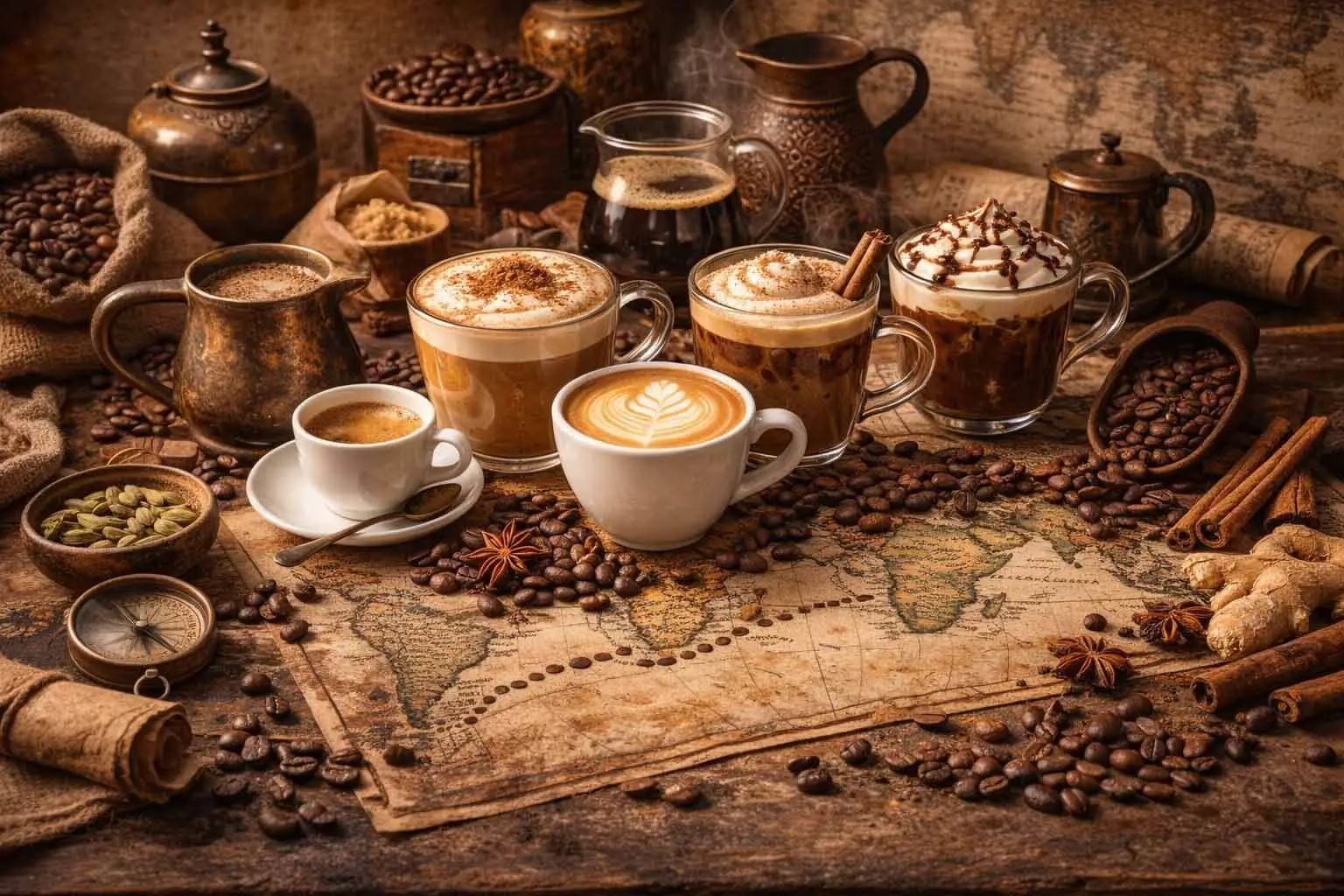
Coffee didn’t begin as a drink meant to impress.
It began as something discovered, almost accidentally, and slowly became something deeply personal.
Long before cafés, menus, or drink names existed, coffee was simply a plant with an effect people noticed. It kept them awake. It sharpened their focus. It created moments of pause and connection. From there, everything else followed.
This is not a story about trends.
It’s a story about how one bean quietly shaped how people drink, gather, and create comfort — across cultures, climates, and daily routines.
Table of Contents
Where Coffee First Appeared
The earliest stories of coffee trace back to East Africa, particularly the Ethiopian highlands. According to tradition, people noticed that certain berries gave energy and alertness when consumed. At first, coffee wasn’t brewed. It was chewed, mixed with fats, or steeped lightly.
What mattered wasn’t the method.
What mattered was the effect.
From the beginning, coffee was functional, grounding, and deeply human.
As trade routes expanded, coffee traveled with merchants, pilgrims, and travelers. It didn’t move because it was fashionable. It moved because people felt something when they consumed it.
How Coffee Spread So Quickly
Coffee reached the Arabian Peninsula, where it began to take on a social role. Brewing methods developed. Gathering around coffee became a ritual. Coffeehouses emerged as places of conversation, reflection, and exchange of ideas.
From there, coffee moved outward:
Into the Middle East
Across North Africa
Into Europe
Then into the Americas and Asia
Every region adopted coffee differently. Some embraced its strength. Others softened it with milk, spices, or sweetness. Some drank it hot. Others adapted it to colder climates or warmer days.
Coffee didn’t demand one identity.
It adapted.
Regions That Made Coffee Their Own
The Middle East
Coffee remained strong, aromatic, and often spiced. Cardamom, cloves, and subtle bitterness became part of the experience. Coffee here wasn’t rushed. It was shared.
Europe
Coffee evolved into espresso culture. Precision mattered. Balance mattered. From this foundation came drinks like cappuccino, latte, and mocha — structured yet flexible.
The Americas
Coffee became daily fuel. Accessible, repeatable, and customizable. This is where variations expanded rapidly, from americanos to flavored drinks and chilled versions.
Asia
Coffee blended with tea culture, milk traditions, and modern experimentation. Matcha lattes, milk-forward drinks, and lighter textures gained popularity.
Each region didn’t just consume coffee.
They shaped it.
What Coffee Gave Us Beyond Caffeine
Coffee offered more than energy.
It created:
Morning rituals
Afternoon pauses
Late-night focus
Shared moments
Personal comfort
Over time, people stopped drinking coffee just for alertness. They drank it for how it felt in their hands, how it smelled, how it fit their day.
This is where coffee transformed from a single drink into an entire world of beverages.
The Birth of Iconic Coffee Drinks
From one ingredient came countless expressions.
Espresso
The foundation. Concentrated, bold, and versatile. It became the base for countless drinks without ever losing its identity.
Americano
A softer expression of espresso. Lighter, smoother, and approachable. Perfect for those who want clarity without intensity.
Cappuccino
A balance of espresso, steamed milk, and foam. Structured, comforting, and iconic.
Latte
Milk-forward, adaptable, and endlessly customizable. Latte became a canvas for flavors, spices, and personal preference.
Mocha
Where coffee meets chocolate. Rich without being overwhelming. Familiar without being boring.
Each drink answered a different emotional need.
How Additions Changed Coffee Forever
At some point, people began asking a simple question:
“What if we change this just a little?”
That’s how additions entered the picture.
Cinnamon added warmth.
Ginger added depth.
Vanilla softened bitterness.
Milk changed texture.
Oat and almond offered alternatives.
Coffee stopped being fixed.
It became flexible.
This flexibility is why coffee works in every season, every culture, and every home.
Quietly Categorizing Coffee Experiences
Without needing to label them loudly, coffee naturally falls into experiences:
Some drinks feel grounding and warm
Some feel light and refreshing
Some feel calm and slow
Some feel sharp and focused
These experiences guide whether a drink belongs in a hot, cold, or iced moment — even if the reader never consciously thinks about it.
That’s the beauty of coffee.
It knows where it belongs.
Why People Keep Exploring Coffee Drinks
People don’t search for coffee drinks because they’re confused.
They search because they care.
They want:
Better balance
Better texture
A drink that fits their mood
A cup they enjoy finishing
This curiosity leads people from one drink to another. From classic to variation. From café version to home version.
Coffee invites experimentation without pressure.
Making Coffee at Home Became Natural
As people grew more familiar with coffee, they began recreating it at home. Not to replace cafés — but to reclaim control.
At home:
Milk can be lighter
Sweetness can be adjusted
Flavors can be subtle
Portions can feel right
Home coffee isn’t about perfection.
It’s about comfort and confidence.
Where SpoonCalc Fits Naturally
When people experiment with coffee at home, they don’t want complexity. They want reassurance.
They want to know:
How ingredients interact
How adjustments change the drink
How one cup differs from another
SpoonCalc exists quietly in that space.
It doesn’t tell people what to drink.
It helps them understand what they’re creating.
By showing proportions, ingredients, and nutritional context, it allows users to experiment intentionally — whether they’re exploring a warm latte, a lighter americano, or something chilled and refreshing.
It supports creativity without interrupting it.
Coffee as an Ongoing Journey
Coffee never stops evolving.
New drinks appear.
Old ones return.
Preferences change.
Yet the foundation remains the same: a simple bean that adapted to human needs.
Whether someone prefers their coffee warm, cold, or somewhere in between, coffee continues to meet them where they are.
And that’s why people keep searching.
Keep experimenting.
Keep coming back.
A Final Thought
Coffee didn’t become global because it tried to be everything.
It became global because it allowed people to make it their own.
From its origins to its countless drinks today, coffee remains one of the most flexible, personal, and human beverages ever created.
And that’s exactly why it still matters — cup after cup.
Frequently Asked Questions
Is coffee only meant to be consumed hot?
Not at all. Coffee adapts easily to cold and iced preparations without losing its character.
Why are there so many coffee drink variations?
Because coffee works as a base. Small changes in milk, water, or flavor create entirely new experiences.
Can coffee drinks be customized at home easily?
Yes. Most popular coffee drinks can be recreated at home with simple tools and thoughtful adjustments.
How can I understand what goes into each coffee drink?
Using a clear ingredient guide or a calculator like SpoonCalc helps visualize proportions and understand balance.
Does experimenting with coffee change its enjoyment?
For most people, experimentation increases confidence and enjoyment rather than complicating the experience.