
Walk into almost any café today and you will notice something interesting.
Even on cold days, many people are still ordering iced drinks.
You might expect hot coffee or warm chocolate during cooler months. Instead, iced matcha, iced mochas, and iced chocolate drinks continue appearing on café counters throughout the year.
This shift reveals something important: people are no longer choosing drinks based only on temperature. They are choosing them based on how the drink makes them feel.
Some drinks help people focus.
Others provide comfort.
Some simply offer a refreshing break during a busy day.
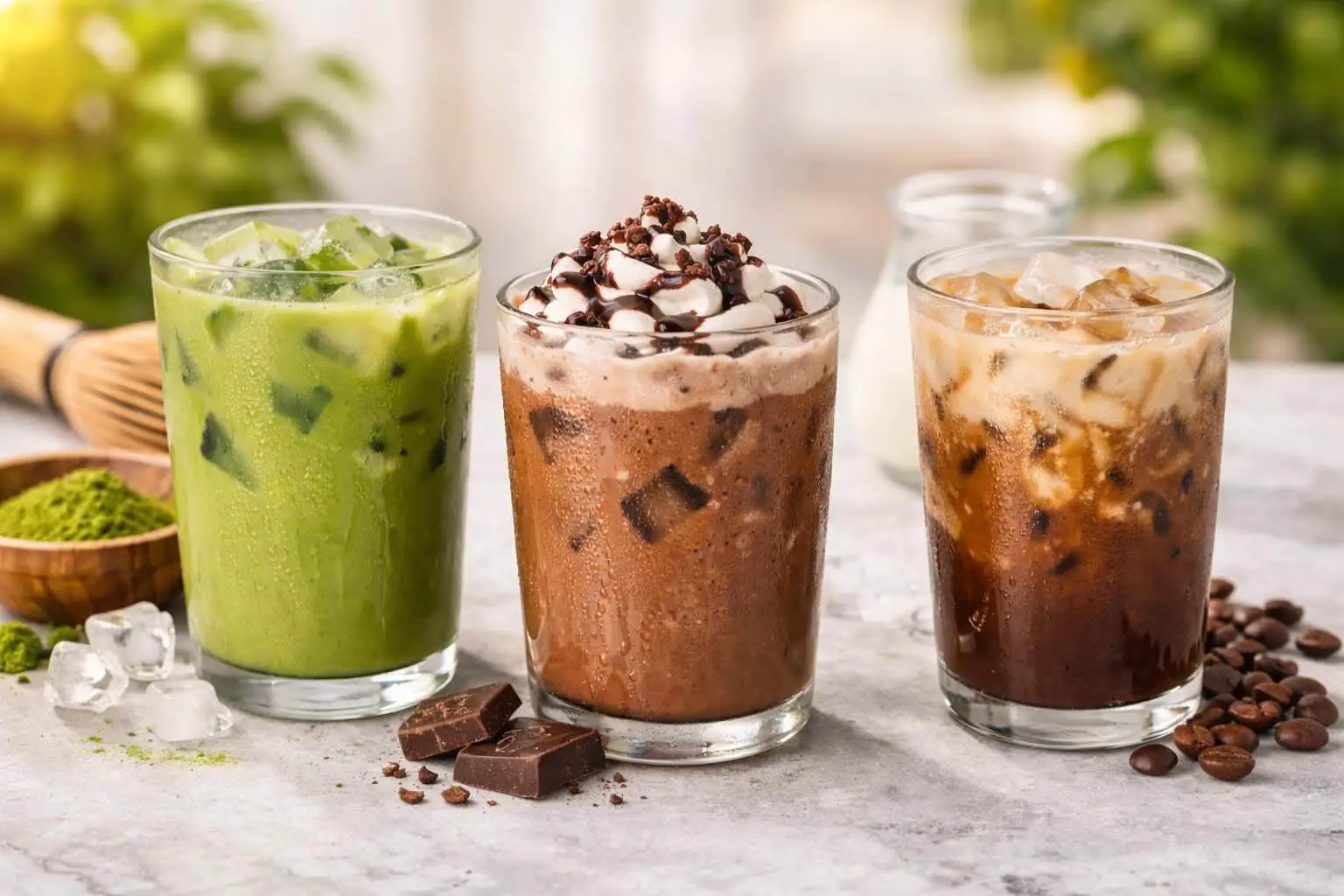
Among the many iced drinks available today, three stand out as everyday favorites: iced matcha, iced mocha, and iced chocolate.
Each drink serves a different purpose. Some offer caffeine and energy, others provide calm focus, and some deliver simple comfort without stimulation.
In this guide, we will explore the differences between iced matcha, iced mocha, and iced chocolate. You will learn how they taste, their calories and caffeine levels, how to prepare them at home, and which drink might suit different moods and situations.
By the end of this article, you will not only understand these drinks better—you will also know how to recreate them at home with confidence.
Iced Matcha vs Iced Mocha vs Iced Chocolate (Quick Answer)
The main difference between iced matcha, iced mocha, and iced chocolate is caffeine and flavor balance. Iced matcha provides calm energy, iced mocha combines coffee and chocolate for balanced stimulation, while iced chocolate offers a caffeine-free comforting drink.
Why Iced Drinks Are Popular Even in Cooler Seasons
For many years, iced drinks were strongly associated with summer. They were considered a way to cool down during hot weather.
But modern drinking habits have changed.
Today, people often choose iced drinks because they fit their daily routines better than hot beverages.
Cold drinks tend to feel lighter and easier to sip over longer periods. Someone working at a computer, studying, or commuting may prefer a drink that lasts longer without becoming unpleasant.
Another factor is texture. Cold beverages often feel smoother and less intense than hot drinks. This can make coffee and chocolate drinks feel more balanced.
Finally, iced drinks allow greater customization. Milk alternatives, sweeteners, flavor syrups, and ingredient ratios can be adjusted easily to match personal preferences.
Because of these advantages, iced drinks are no longer seasonal—they have become part of everyday life.
Understanding the Three Most Popular Iced Comfort Drinks
Although cafés offer dozens of cold beverages, three drinks consistently appear among everyday favorites:
- Iced Matcha Latte
- Iced Mocha
- Iced Chocolate
These drinks represent three different experiences:
| Drink | Main Character |
|---|---|
| Iced Matcha | Calm energy |
| Iced Mocha | Balanced energy and indulgence |
| Iced Chocolate | Comfort without caffeine |
Understanding these differences helps people choose drinks more intentionally.
Iced Matcha: Calm Energy in Its Purest Form
What Makes Matcha Unique
Matcha is a finely ground green tea powder that has been used in Japanese tea culture for centuries.
Unlike regular tea, where leaves are steeped and removed, matcha is whisked directly into the drink. This means the entire leaf is consumed, providing a unique flavor and nutritional profile.
When served cold with milk, matcha becomes a refreshing drink that offers energy without the intensity many people associate with coffee.
Taste Experience
Iced matcha has a flavor that many people describe as:
- earthy
- slightly grassy
- creamy when mixed with milk
- subtly sweet if sweetener is added
The drink feels smooth and clean rather than heavy.
Calories and Caffeine
Typical iced matcha latte values:
Calories: 70–120
Caffeine: 60–70 mg
Matcha contains caffeine but also includes compounds such as L-theanine, which many people associate with calm and sustained focus.
Simple Iced Matcha Recipe
Ingredients:
• 1 teaspoon matcha powder
• 1 cup milk (dairy or plant-based)
• ice cubes
• honey or syrup (optional)
Steps:
- Whisk matcha with 2 tablespoons warm water.
- Fill a glass with ice.
- Pour milk over the ice.
- Add the whisked matcha and stir.
Preparation difficulty: Easy
Iced Chocolate: Comfort Without Caffeine
Why Chocolate Works So Well Cold
Chocolate drinks are often associated with warmth, but when served cold they become lighter and more refreshing.
Iced chocolate offers a creamy, satisfying taste without caffeine, making it a popular choice for people who want comfort without stimulation.
Taste Experience
Iced chocolate drinks are typically:
- smooth
- creamy
- sweet but not overwhelming
- familiar and comforting
The drink feels indulgent without becoming heavy like a dessert.
Calories and Caffeine
Calories: 150–220
Caffeine: 0 mg
Because it contains no caffeine, iced chocolate can be enjoyed at any time of day.
Simple Iced Chocolate Recipe
Ingredients:
• 1 cup milk
• 1 tablespoon cocoa powder
• 1 tablespoon sugar
• ice cubes
Steps:
- Mix cocoa powder and sugar with warm milk.
- Stir until smooth.
- Fill a glass with ice.
- Pour chocolate milk over the ice.
Difficulty: Very easy

Iced Mocha: The Perfect Balance Between Coffee and Chocolate
Why Mocha Is So Popular
Iced mocha combines two flavors people already love: coffee and chocolate.
Coffee provides energy and depth, while chocolate softens the bitterness and adds sweetness.
This balance makes iced mocha one of the most satisfying café drinks.
Taste Experience
Iced mocha is often described as:
- rich
- smooth
- lightly sweet
- balanced between coffee and chocolate
It feels indulgent without being overwhelming.
Calories and Caffeine
Calories: 180–250
Caffeine: 80–100 mg
The caffeine level depends on the amount of espresso used.
Simple Iced Mocha Recipe
Ingredients:
• 1 shot espresso
• 1 cup milk
• 1 tablespoon chocolate syrup
• ice cubes
Steps:
- Fill a glass with ice.
- Add milk.
- Mix espresso with chocolate syrup.
- Pour the mixture over the milk.
Difficulty: Easy
Iced Matcha vs Iced Mocha vs Iced Chocolate
Understanding the differences between these drinks helps people choose the right one for the moment.
| Drink | Calories | Caffeine | Best For |
|---|---|---|---|
| Iced Matcha | 70–120 | 60–70 mg | calm focus |
| Iced Mocha | 180–250 | 80–100 mg | energy + comfort |
| Iced Chocolate | 150–220 | 0 mg | caffeine-free indulgence |
Each drink serves a different purpose depending on mood and energy needs.
Choosing the Right Iced Drink for Your Mood
One of the reasons iced drinks remain popular year-round is that they adapt easily to different situations.
When you need focus
Iced matcha provides gentle energy without feeling overwhelming.
When you want energy and flavor
Iced mocha offers both caffeine and indulgent taste.
When you want comfort without caffeine
Iced chocolate provides a relaxing option.
Instead of asking which drink is best, it is often more helpful to ask which drink fits the moment.
Common Mistakes When Making Iced Drinks at Home
Many homemade iced drinks fail not because of ingredients but because of small mistakes.
Using too much ice
Excess ice quickly dilutes the drink.
Using weak coffee or matcha
Cold drinks require stronger base flavors to maintain balance.
Adding too much sugar
Excess sweetness hides natural flavors.
Correcting these mistakes can dramatically improve homemade drinks.
Barista Tips for Better Homemade Iced Drinks
Professional baristas often follow simple principles.
• brew coffee slightly stronger for iced drinks
• whisk matcha thoroughly to avoid clumps
• chill ingredients before mixing
• use larger ice cubes to slow dilution
Small adjustments can make a significant difference in flavor.
Making Café-Quality Iced Drinks at Home
Many people assume café drinks require special equipment.
In reality, the most important factor is balance.
Adjusting proportions slightly—coffee strength, milk amount, sweetness—can completely change how a drink feels.
Some home drink makers use simple tools to calculate ingredient ratios and repeat drinks consistently. Tools designed for drink preparation can support experimentation while maintaining balance.
The goal is not strict measurement but confidence.
Why Iced Drinks Are Becoming Everyday Rituals
For many people, drinks represent small daily rituals.
An iced matcha may signal the beginning of a focused work session.
An iced mocha may accompany creative tasks or long afternoons.
An iced chocolate may mark a quiet evening break.
These drinks provide more than refreshment—they create moments.
Because of this emotional connection, iced drinks continue to be chosen throughout the year.
Final Thoughts
Iced matcha, iced mocha, and iced chocolate are not simply seasonal drinks.
They represent three different experiences:
- calm focus
- balanced energy
- gentle comfort
Each drink fits a different mood and moment.
By understanding their flavors, ingredients, and preparation methods, anyone can recreate these drinks at home and enjoy café-style beverages without complexity.
Sometimes the perfect drink is not about temperature at all—it is about how the drink fits into your day.
Frequently Asked Questions
Are iced drinks suitable in winter?
Yes. Many people prefer iced drinks year-round because they feel lighter and easier to enjoy slowly.
Which iced drink contains the most caffeine?
Iced mocha usually contains the highest caffeine because it includes espresso.
Is iced chocolate caffeine-free?
Yes. Most iced chocolate drinks contain no caffeine.
Can iced matcha replace coffee?
For some people, yes. Matcha provides caffeine but often feels smoother than coffee.
Can these drinks be made at home easily?
Absolutely. With simple ingredients and balanced proportions, café-style iced drinks can be recreated at home.
2 thoughts on “Iced Matcha vs Iced Mocha vs Iced Chocolate: Which One Should You Choose?”