
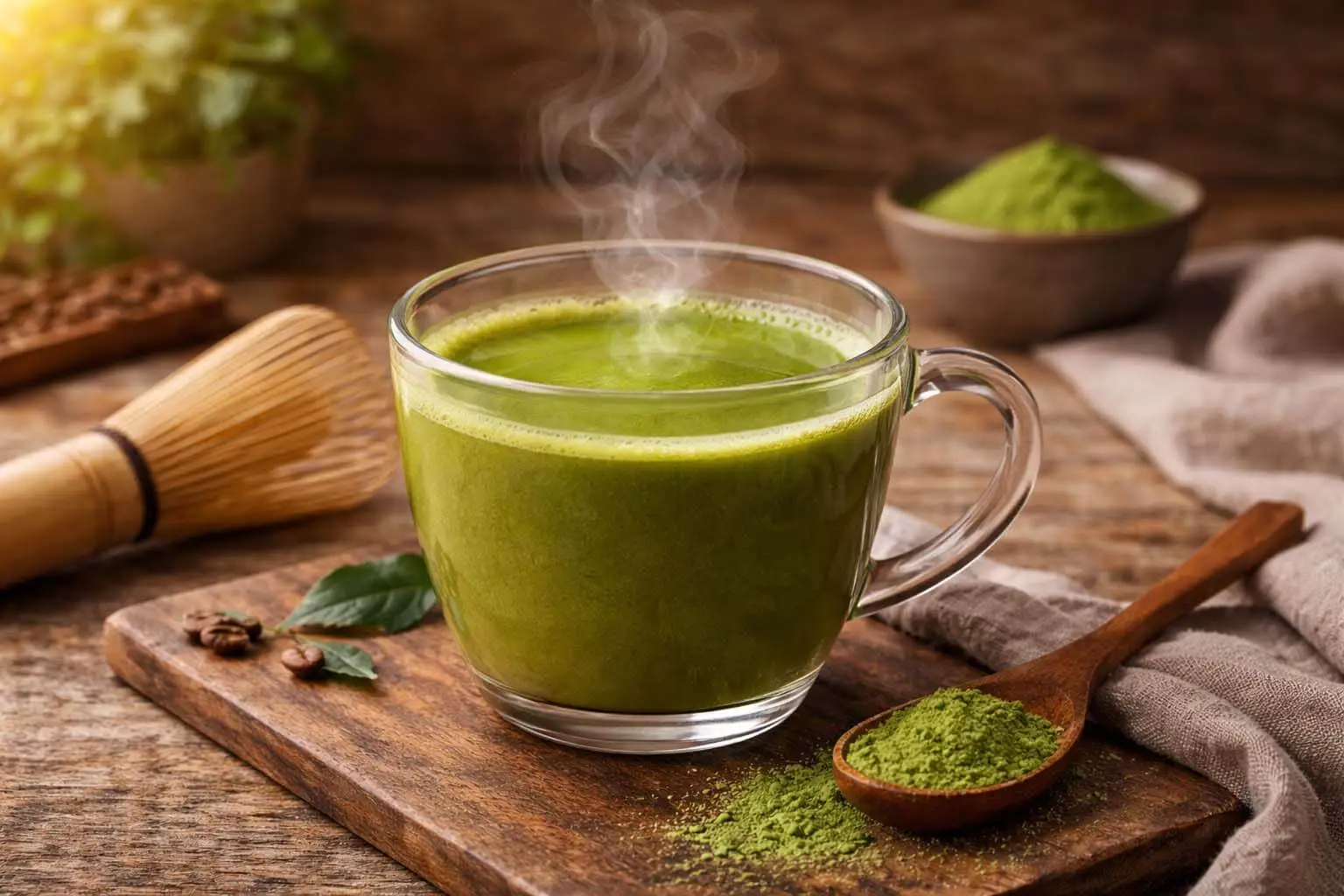
What Is Hot Matcha?
Hot matcha is more than a warm green drink. It is a finely ground green tea powder that has been part of daily life in Japan for centuries, prepared with intention, patience, and respect for balance.
Unlike regular green tea, matcha is not steeped and discarded. The entire leaf is consumed, whisked gently into hot water until it becomes smooth, vibrant, and comforting. This simple difference is what gives matcha its unique depth, flavor, and presence.
When served hot, matcha reveals its most authentic character. The aroma is earthy and fresh, the taste slightly grassy with a soft bitterness that fades into calm warmth.
Table of Contents
The Origins of Matcha and Its Cultural Roots
Matcha has deep roots in Japanese tea culture, where it was traditionally used in tea ceremonies that focused on mindfulness rather than speed. Preparing matcha was never about rushing. It was about slowing down, paying attention, and being present.
Over time, this quiet ritual found its way beyond temples and tea rooms. What once belonged to a specific culture gradually became something the world could connect with, especially as modern lifestyles began searching for calmer alternatives to constant stimulation.
Hot matcha carried that philosophy with it wherever it traveled.
Why Hot Matcha Became Popular Around the World
As coffee culture expanded globally, so did fatigue from overstimulation. People began looking for drinks that felt gentler, more balanced, and less aggressive.
Hot matcha entered cafés as a thoughtful alternative. It did not try to compete with coffee. It simply offered something different.
The warmth of the drink, combined with its smooth energy, made it appealing to people who wanted focus without tension. Slowly, matcha moved from specialty tea shops into everyday cafés, wellness spaces, and home kitchens.
In many places, drinking hot matcha became part of a morning ritual or a quiet afternoon pause.
How People Enjoy Hot Matcha Today
Hot matcha is no longer limited to traditional preparation. Around the world, people enjoy it in different ways while still respecting its simplicity.
Some prefer it prepared the classic way, using only hot water and a whisk. Others enjoy it as a creamy matcha latte, blended with milk or plant-based alternatives.
At home, hot matcha has become a personal drink. Some like it stronger and more intense. Others prefer it softer, smoother, and lightly sweetened.
This flexibility is one of the reasons matcha continues to grow in popularity.
How to Prepare Hot Matcha at Home
Preparing hot matcha at home does not require perfection. It requires attention.
Good matcha powder, warm water that is not boiling, and gentle whisking are the foundation. The goal is not foam for decoration, but smoothness for experience.
Many first-time drinkers find matcha bitter. This often happens when the water is too hot or the balance is off. With a little adjustment, the bitterness softens and the flavor opens.
Hot matcha rewards patience. The more you prepare it, the more intuitive it becomes.
Hot Matcha Versus Cold and Iced Matcha
Hot matcha feels grounding. Cold and iced matcha feel refreshing.
When matcha is served hot, its flavor is deeper and more layered. The warmth enhances its earthy notes and makes it feel calming.
Cold matcha highlights freshness. Iced matcha feels sharper and more energizing, especially during warmer days.
None of these versions is better than the other. They simply serve different moments. Hot matcha belongs to slow mornings, quiet afternoons, and reflective pauses. Cold and iced matcha belong to movement and heat.
Understanding this difference helps people choose matcha that fits their mood rather than following trends.
Why Some People Replace Coffee with Hot Matcha
Many people do not stop drinking coffee because they dislike it. They stop because it no longer serves them the way it used to.
Hot matcha offers a smoother experience. The energy feels steady rather than sudden. The warmth feels comforting rather than stimulating.
This makes hot matcha especially appealing during workdays that require focus without restlessness. It supports attention while allowing the body to remain calm.
For some, matcha becomes a daily companion rather than a boost.
Hot Matcha and Modern Daily Routines
Hot matcha fits naturally into modern routines because it adapts.
It can be part of a quiet morning before emails. It can be a gentle afternoon break. It can even replace evening coffee without disturbing rest.
This adaptability is what makes hot matcha more than a trend. It becomes a habit, shaped by personal preference rather than rules.
Finding the Right Balance When Preparing Matcha
One of the challenges people face with matcha is balance. Too much powder can overwhelm the flavor. Too little can make the drink feel empty.
This is where small adjustments make a big difference. Changing the amount of matcha, the water, or the milk slightly can completely change the experience.
Many home drink makers enjoy experimenting, but consistency matters when you want to repeat what works.
This is why some people use simple tools to guide their preparation. A drink calculator like SpoonCalc helps remove guesswork by allowing you to adjust strength and ratios intentionally, without taking creativity away from the process.
It becomes easier to explore different matcha styles while staying in control of the result.
Why Hot Matcha Continues to Grow in Popularity
Hot matcha aligns with how people want to feel today.
Calm, focused, intentional, and balanced.
It does not demand attention. It offers presence. It does not rush. It invites.
As more people seek drinks that support both productivity and well-being, hot matcha naturally earns its place.
Frequently Asked Questions About Hot Matcha
Is hot matcha stronger than coffee?
Hot matcha feels different rather than stronger. Its energy is smoother and more gradual, which many people prefer.
Can hot matcha be consumed daily?
Many people enjoy hot matcha as a daily drink because it feels balanced and gentle.
Why does hot matcha sometimes taste bitter?
Bitterness usually comes from water that is too hot or an imbalance in preparation.
Is matcha latte the same as traditional hot matcha?
A matcha latte includes milk and feels creamier, while traditional matcha is prepared with water for a more pure flavor.
Can hot matcha be customized at home?
Yes. Strength, milk type, and sweetness can all be adjusted to personal preference.
Final Thoughts
Hot matcha is not about replacing anything. It is about offering another way to pause, focus, and enjoy a moment.
Whether prepared traditionally or adapted to modern tastes, it remains a drink that invites balance into daily life.
And that quiet invitation is exactly why it continues to spread across kitchens and cafés around the world.
2 thoughts on “Hot Matcha: How a Simple Green Drink Became a Global Daily Ritual”