
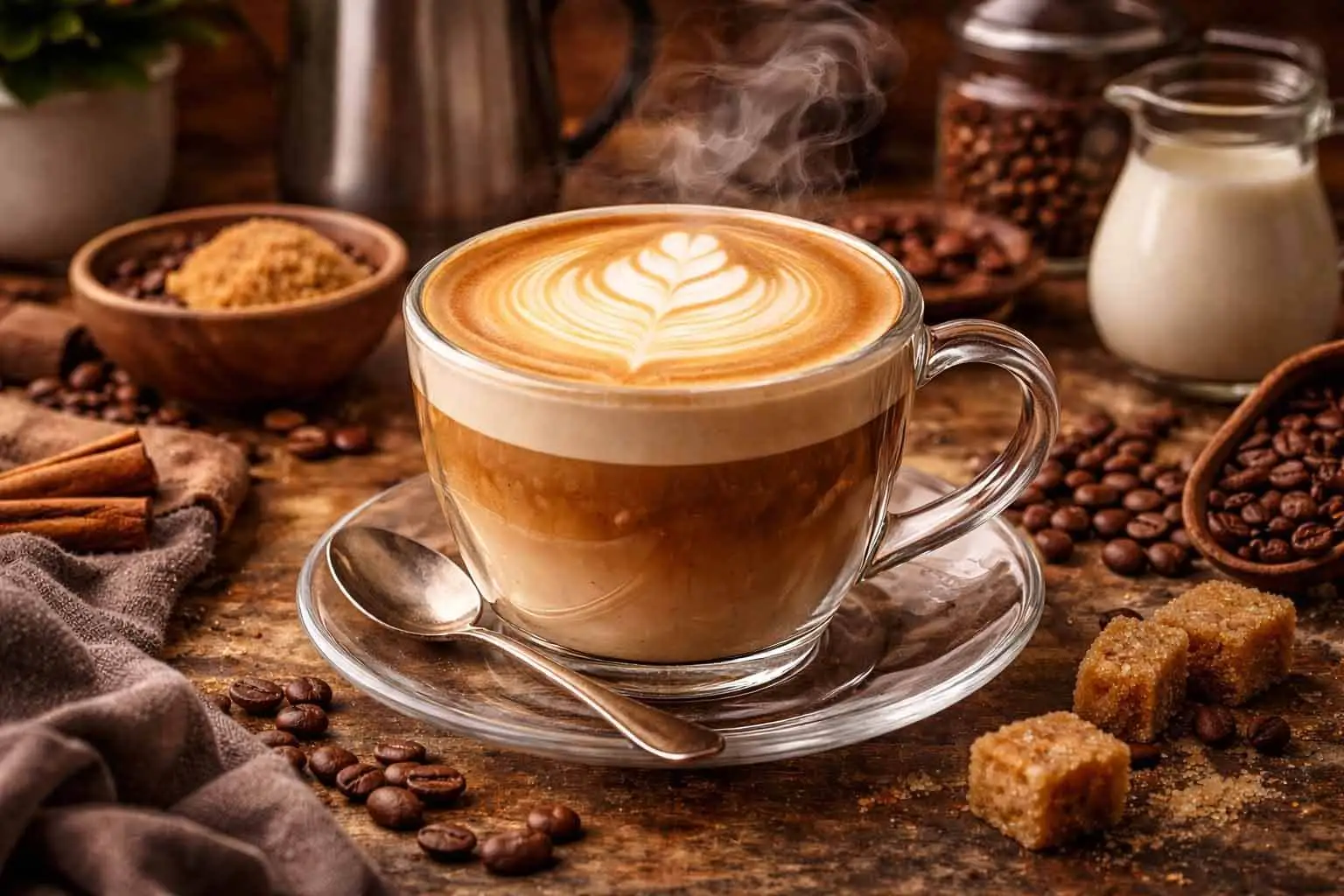
Some drinks demand attention.
Others simply belong.
The hot latte is one of those rare drinks that doesn’t need an introduction, yet somehow deserves one. It appears quietly on café menus, kitchen counters, office desks, and morning routines across the world.
Not because it’s dramatic.
Not because it’s complex.
But because it adapts.
A hot latte is coffee reduced to its most human form: warmth, balance, comfort, and familiarity. It can be precise or forgiving. Crafted or casual. Shared or solitary.
This is the story of how a simple combination of espresso and milk became one of the most universal drinks on the planet — and why it continues to feel at home everywhere.
Where the Hot Latte Comes From (And Why It Survived)
The word latte comes from caffè latte, meaning “coffee with milk” in Italian.
But the modern hot latte as we know it today didn’t truly originate in Italy.
In Italy:
- Milk-based coffee is traditionally a morning-only drink
- Espresso remains the cultural standard
- Coffee is quick, intense, and social
The latte evolved outside Italy, particularly in:
- The United States
- Northern Europe
- Later, Asia and the Middle East
As espresso culture traveled, people adapted it to their own rhythms:
- Longer mornings
- Larger cups
- Slower consumption
- A preference for smoother flavors
Milk softened espresso.
Heat extended the moment.
The latte was born not from tradition, but from adaptation.
And that adaptability is exactly why it survived.
Why the Hot Latte Became a Global, Everyday Drink
The hot latte didn’t spread because it was exotic.
It spread because it was flexible.
It works everywhere because:
- It doesn’t require rare ingredients
- It scales from home kitchens to specialty cafés
- It welcomes customization without losing identity
A latte can be:
- Strong or mild
- Dairy or plant-based
- Sweetened or plain
- Precise or intuitive
Few drinks tolerate this much variation while remaining recognizable.
That’s why the latte fits:
- Urban cafés
- Corporate offices
- Family kitchens
- Airports
- Small towns
It’s not tied to a moment.
It adapts to one.
Hot Latte vs Cappuccino vs Mocha (The Real Differences)
These three are often grouped together — but they serve very different purposes.
Hot Latte
- More milk than espresso
- Smooth, balanced
- Designed for slow sipping
- Coffee-forward, but gentle
Psychology: comfort, routine, familiarity
Cappuccino
- Equal parts espresso, steamed milk, foam
- Lighter texture, stronger coffee presence
- Feels more structured
Psychology: alertness, intention, classic café culture
Mocha
- Espresso + milk + chocolate
- Sweeter, dessert-like
- Emotionally indulgent
Psychology: pleasure, reward, mood-lifting
The latte sits between strength and softness.
That balance is why it becomes a daily habit, not an occasional treat.
Famous Hot Latte Variations Around the World
The latte changes slightly depending on where you are — and that’s part of its charm.
United States & Canada
- Larger cup sizes
- Milk-forward
- Often flavored (vanilla, caramel, hazelnut)
United Kingdom
- Less sweet
- Moderate milk
- Stronger espresso presence
France
- Café au lait at home
- Bowl-style servings
- Breakfast tradition
Scandinavia
- Clean, minimal
- High-quality coffee
- Less customization
Japan
- Precision-focused
- Perfect temperature control
- Often enjoyed quietly
Middle East
- Increasing popularity
- Sometimes paired with spices
- Strong café culture growth
Every version respects the same core idea:
Espresso softened by milk, without excess.
Who Drinks Hot Lattes (And Why)
The hot latte isn’t about demographics.
It’s about moments.
People choose hot lattes when they want:
- Focus without sharpness
- Comfort without heaviness
- Routine without boredom
It’s often chosen by:
- Morning workers
- Students
- Creatives
- Home brewers
- People easing into caffeine
Unlike aggressive coffee styles, the latte invites consistency.
And consistency builds loyalty.
The Most Consuming Countries of Milk-Based Coffee
While exact numbers shift, patterns remain clear.
Top regions for hot latte consumption include:
- United States
- United Kingdom
- Canada
- Australia
- Germany
- Nordic countries
What they share:
- Strong café culture
- Home brewing habits
- Preference for milk-based coffee
The latte isn’t trendy there.
It’s normal — and that’s its strength.
Classic Hot Latte Recipe (Café Standard)
Ingredients:
- 1 shot espresso (30 ml)
- 180–240 ml steamed milk
- Light microfoam
Method:
- Brew espresso
- Steam milk to 60–65°C
- Pour milk gently over espresso
- Minimal foam on top
This recipe isn’t strict.
It’s a reference point.
Popular Home Variations
Vanilla Latte
- Add vanilla extract or syrup
- Softens bitterness
Honey Latte
- Natural sweetness
- Warmer mouthfeel
Cinnamon Latte
- Subtle spice
- Comfort-focused
Oat Milk Latte
- Naturally sweet
- Creamy without dairy
Each variation reflects preference, not rules.
Where SpoonCalc Fits Naturally
SpoonCalc doesn’t replace intuition.
It supports it.
When making a latte at home, people don’t want complexity.
They want reassurance:
- Is the balance right?
- Is the milk overpowering?
- Can I repeat this tomorrow?
SpoonCalc offers quiet confidence.
A way to explore, adjust, and repeat — without turning coffee into math.
That’s exactly how latte drinkers think.
Why the Hot Latte Will Always Stay Relevant
Trends change.
Coffee evolves.
Equipment improves.
But the hot latte remains because it respects simplicity.
It doesn’t compete.
It adapts.
And in a world that constantly accelerates, a drink that slows people down — gently — will always have a place.
Final Thoughts: Why the Hot Latte Endures
The hot latte didn’t become popular because it was marketed.
It became popular because it worked.
It worked for people who wanted coffee without sharpness.
It worked for homes without café equipment.
It worked for cultures that valued warmth, balance, and routine.
More than anything, the hot latte gave people permission to adjust — to soften, to personalize, to repeat without pressure.
That’s why it didn’t fade.
That’s why it didn’t stay confined to cafés.
And that’s why it remains one of the most prepared coffee drinks in the world.
Not loud.
Not complicated.
Just consistently right.
Frequently Asked Questions About Hot Lattes
What is a hot latte made of?
A hot latte is made from espresso and steamed milk, usually with a small layer of foam on top. The milk-to-coffee ratio is higher than most espresso drinks, which gives it a smooth and gentle flavor.
Is a hot latte stronger than a cappuccino?
No. A cappuccino typically tastes stronger because it has less milk relative to espresso. A hot latte contains more milk, which softens the coffee intensity.
Can I make a hot latte without an espresso machine?
Yes. Strong brewed coffee or moka pot coffee can be used at home. While it won’t be identical to espresso, the result can still be balanced and enjoyable.
What milk works best for a hot latte?
Whole milk is traditionally used, but oat milk, almond milk, and soy milk are popular alternatives. The best milk depends on how creamy or light you prefer your latte.
Is a hot latte sweet by default?
No. A classic hot latte is not sweetened unless you add sugar, honey, or flavored syrups. Many people enjoy it plain.
How hot should a latte be?
Ideally, milk should be heated to around 60–65°C (140–150°F). Overheating can flatten flavor and reduce milk texture.
Why do people prefer lattes for daily drinking?
Because they are easy to customize, gentle on the palate, and repeatable. Lattes feel familiar rather than overwhelming, which makes them suitable for daily routines.
Can hot lattes be part of a balanced routine?
Yes. Many people choose lattes because they offer caffeine without sharpness and can be adjusted in strength, milk type, and size to fit personal habits.
1 thought on “Hot Latte: Why This Simple Coffee Became a Daily Ritual Worldwide”