
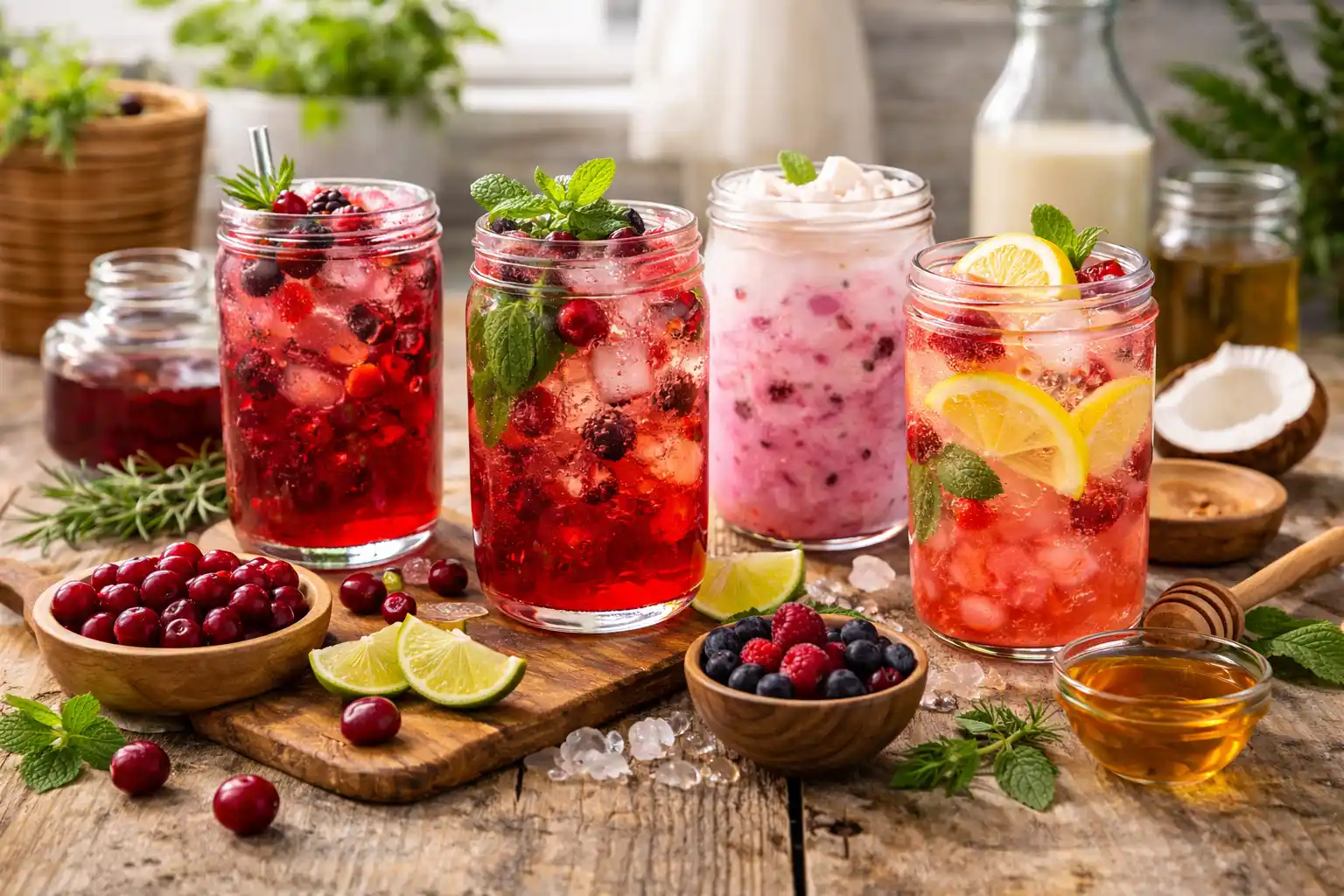
Some cold drinks shout for attention.
Others simply refresh you — quietly, naturally, and without effort.
Cranberry and raspberry drinks belong to the second kind.
They don’t rely on heavy sweetness.
They don’t need complicated preparation.
They don’t pretend to be something else.
They are crisp, slightly tart, deeply refreshing, and surprisingly flexible. And that’s exactly why they’ve earned a permanent place in kitchens, cafés, and everyday routines.
This isn’t about trends.
It’s about why berry-based cold drinks remain relevant — especially when people want something clean, cooling, and balanced.
Table of Contents
The Quiet Rise of Cranberry & Raspberry Drinks
Cranberries have been used for centuries — valued for their sharp flavor and natural preserving qualities. Historically consumed as diluted infusions or herbal blends, they were rarely meant to be heavy.
Raspberries, on the other hand, introduced a softer dimension. Their natural sweetness and mild acidity made them ideal for blending — especially in colder beverages where balance matters.
What connects them is structure.
Cranberry delivers clarity.
Raspberry softens edges.
Neither overwhelms. Together, they create controlled refreshment.
Why Cranberry-Based Cold Drinks Feel So Refreshing
Cranberry drinks feel different because of acidity structure.
Unlike sugar-heavy drinks, they stimulate rather than coat the palate.
Cold temperature amplifies this effect.
That subtle tartness resets the mouth, making each sip feel new. When served over ice, the contrast between acidity and chill creates clarity instead of heaviness.
Raspberry blends adjust this brightness gently. They reduce sharpness without turning the drink sweet.
This is not accidental.
It’s chemical balance.
Cranberry vs Raspberry: A Functional Comparison
Cranberry:
- Higher perceived acidity
- Sharper finish
- More energizing profile
Raspberry:
- Softer acidity
- Light natural sweetness
- More rounded mouthfeel
Cranberry works well in sparkling or citrus blends.
Raspberry performs better in floral or creamy variations.
Understanding this prevents imbalance — especially at home.
Practical Berry-Based Cold Drinks You Can Make at Home
Classic Cranberry Iced Drink (The Pure Version)
Ingredients
- Unsweetened cranberry juice
- Cold water
- Large ice cubes
Method
Start with a 60:40 ratio (cranberry to water).
Add large ice cubes.
Stir gently and taste before adjusting.
Common Mistake
Over-diluting immediately.
Add water gradually — cranberry weakens quickly with excess dilution.
Cranberry Lemon Cooler
Ingredients
- Cranberry juice
- Fresh lemon juice
- Cold water
- Ice
Why It Works
Lemon increases brightness but must remain secondary.
Pro Tip
Add lemon in small increments (5–10 ml at a time). Too much shifts the drink from refreshing to aggressive.
Cranberry Mint Refresher
Ingredients
- Cranberry juice
- Fresh mint leaves
- Cold water
- Ice
Technique Note
Lightly press mint — do not crush aggressively. Over-muddling releases bitterness.
Sparkling Cranberry Drink
Ingredients
- Cranberry juice
- Sparkling water
- Ice
Order Matters
Ice → cranberry → sparkling water last.
Do not stir heavily or carbonation fades.
Comparison Insight
Sparkling water enhances acidity perception without adding sugar — ideal for reducing sweetness naturally.
Creamy Cranberry (Plant-Based Option)
Ingredients
- Diluted cranberry juice
- Oat milk or almond milk
- Ice
Hidden Factor
Berry acidity reacts with dairy differently than plant-based milk. Always dilute cranberry before adding milk.
Raspberry Cold Drink (Soft & Floral)
Ingredients
- Raspberry juice or puree
- Cold water
- Ice
Flavor Note
Raspberry feels smoother. Avoid over-sweetening — it masks its natural character.
Blending Cranberry and Raspberry Together
A 50:50 diluted base creates structure.
Cranberry sharpens.
Raspberry rounds.
This combination reduces the need for added sweeteners.
Common Mistakes with Berry Iced Drinks
Many home versions fail due to:
- Using crushed ice (melts too fast)
- Adding sweetener before tasting acidity
- Not chilling water beforehand
- Ignoring cup size when adjusting dilution
Berry drinks are more sensitive to dilution than coffee-based drinks.
Small changes matter.
Tools You Actually Need (Nothing Fancy)
- Medium or large glass
- Spoon
- Measuring cup (recommended)
- Large ice cubes
Precision is helpful — not mandatory — but it improves repeatability.
Choosing the Right Cup Size
Smaller glass = stronger perception.
Larger glass = softer experience.
For cranberry-heavy drinks, 250–350ml works best.
Cup size changes dilution dynamics more than most people realize.
Making It Personal Without Overthinking
There is no single perfect ratio.
Some prefer sharper profiles.
Others prefer soft dilution.
The challenge is repeatability.
This is where SpoonCalc becomes practical — not to complicate drinks, but to maintain proportions when scaling servings or adjusting strength.
Use it once to find your preferred ratio.
Then repeat confidently.
Calories Without Stress
Unsweetened cranberry and raspberry drinks are naturally light.
The issue is not the fruit.
It’s added sugar.
Balance portions instead of eliminating flavor.
Control dilution. Adjust sweetness gradually. Stay aware of total cup volume.
Why These Drinks Keep Coming Back
They don’t overwhelm.
They adapt.
They refresh without fatigue.
Cranberry and raspberry drinks stay relevant because they respond to balance — not trends.
They reward subtle adjustment.
Final Thoughts: Balance Over Drama
Berry-based cold drinks teach something simple:
Refreshment is structural.
It’s about acidity, dilution, temperature, and proportion.
When you understand that, even the simplest glass feels intentional.
Not loud.
Not heavy.
Just balanced.
And that’s why they last.
Frequently Asked Questions
What is the difference between cranberry and raspberry drinks?
Cranberry drinks are sharper and more acidic. Raspberry drinks are softer and slightly sweeter.
Do I need sugar?
No. Dilution often replaces the need for added sweetener.
Why does my drink taste watery?
Too much melted ice or excessive water. Use larger cubes and add water gradually.
Can I make these drinks creamy?
Yes — plant-based milk works best when cranberry is diluted first.
How can I keep proportions consistent?
Measure once, then maintain ratios. Tools like SpoonCalc help scale servings without imbalance.